Introduction
When it comes to pizza, there’s only one rule: grab the calculator. Pick how many pizzas you want and how big you want them (240 g per pizza is perfect on a pizza stone), and this recipe gives you gram-accurate amounts right away.
This dough is built for a cold ferment in the fridge. You get better flavor, easier stretching, and a crust that can handle serious heat without drying out. And yes: this is one of those times where a scale genuinely makes things simpler. It still works well with just 1 hour of rising time; in that case, use more yeast, and half a packet of dry yeast works well.
Step-by-step
Dough Calculator
Dough calculator
Based on 65% water, 2.5% salt, 2% oil, 0.5% yeast.
Total dough:
| g | Baker’s % | |
|---|---|---|
| Flour | 100% | |
| Water | 65% | |
| Salt | 2.5% | |
| Olive oil | 2% | |
| Instant yeast | 0.5% |
Ingredients
The calculator above gives you the exact amounts. As a rule of thumb:
- 240 g per pizza (pizza stone, typical home oven)
- 260–300 g per pizza (a bit thicker / airier rim)
- 160–200 g per pizza (thinner, crispier base)
Method
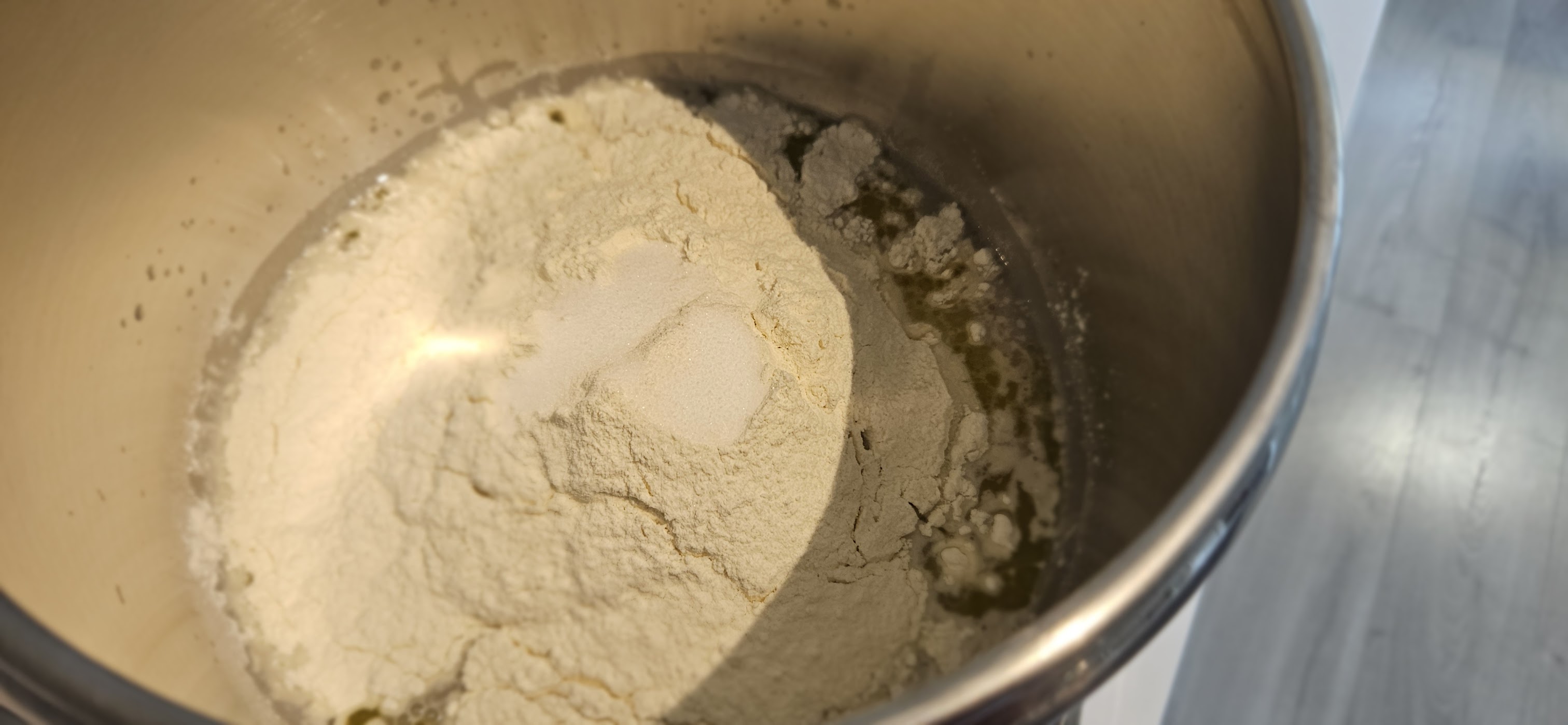
- Mix flour and water until just combined. Rest 20 minutes (autolyse).
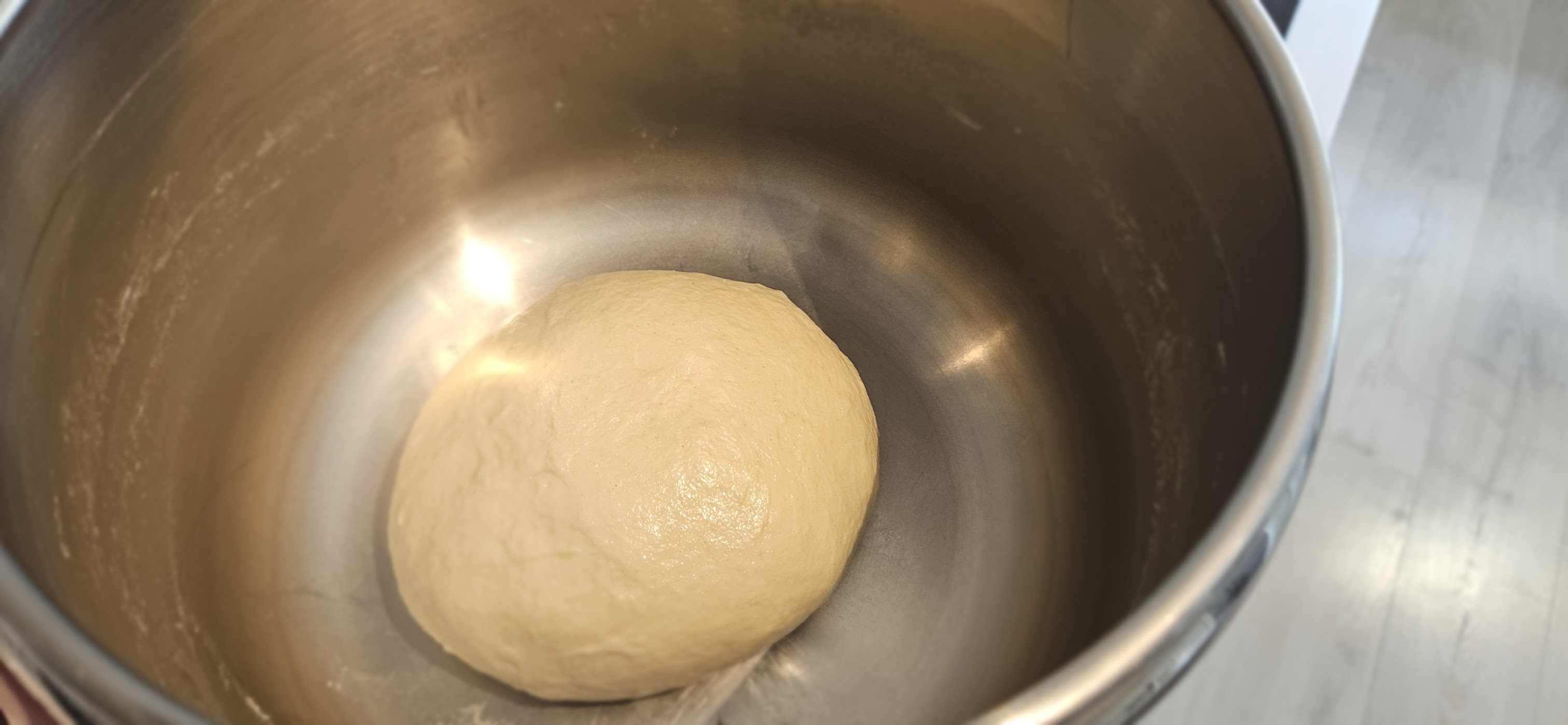
- Add salt and yeast. Knead 8–12 minutes until smooth and elastic. Add olive oil near the end and knead until fully absorbed.
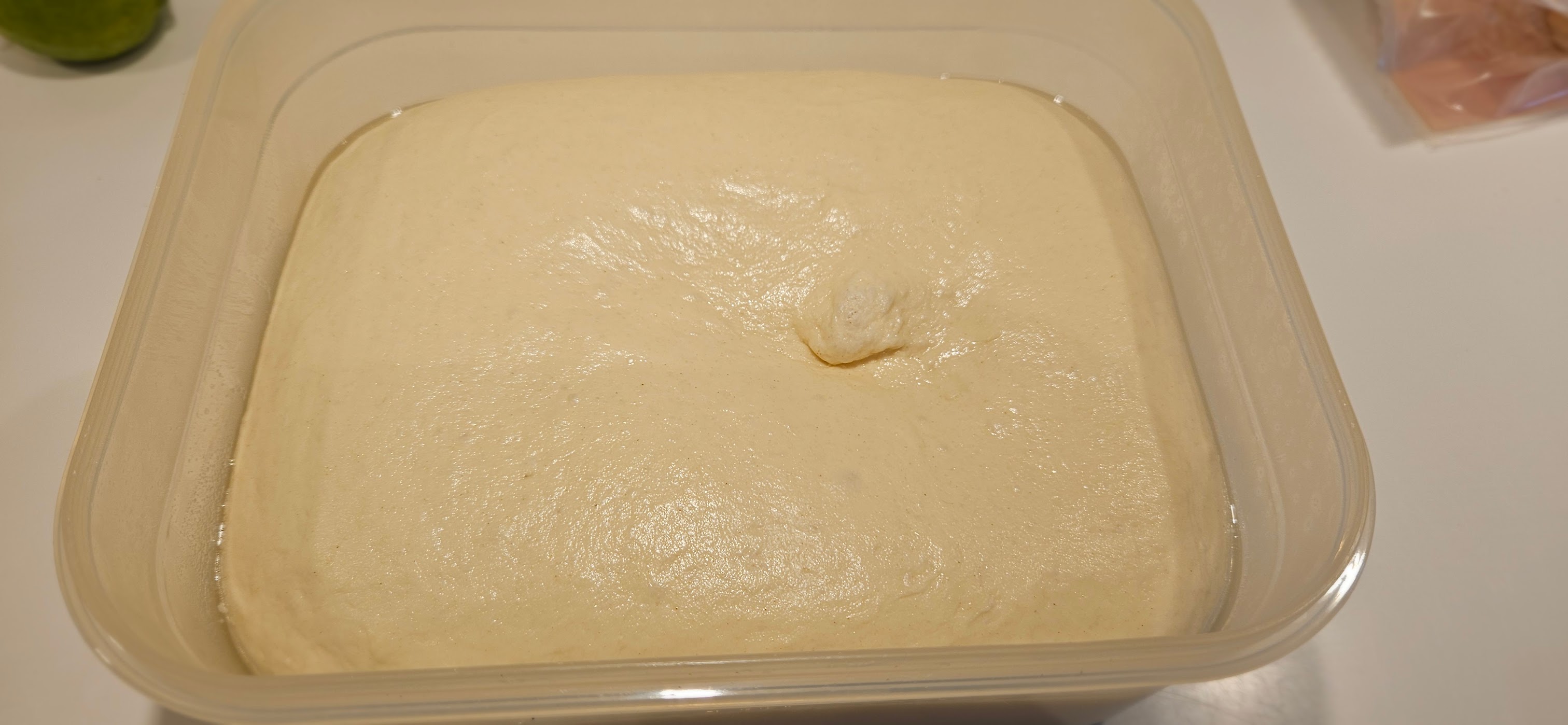
- Cover and rest at room temperature for 45–60 minutes.
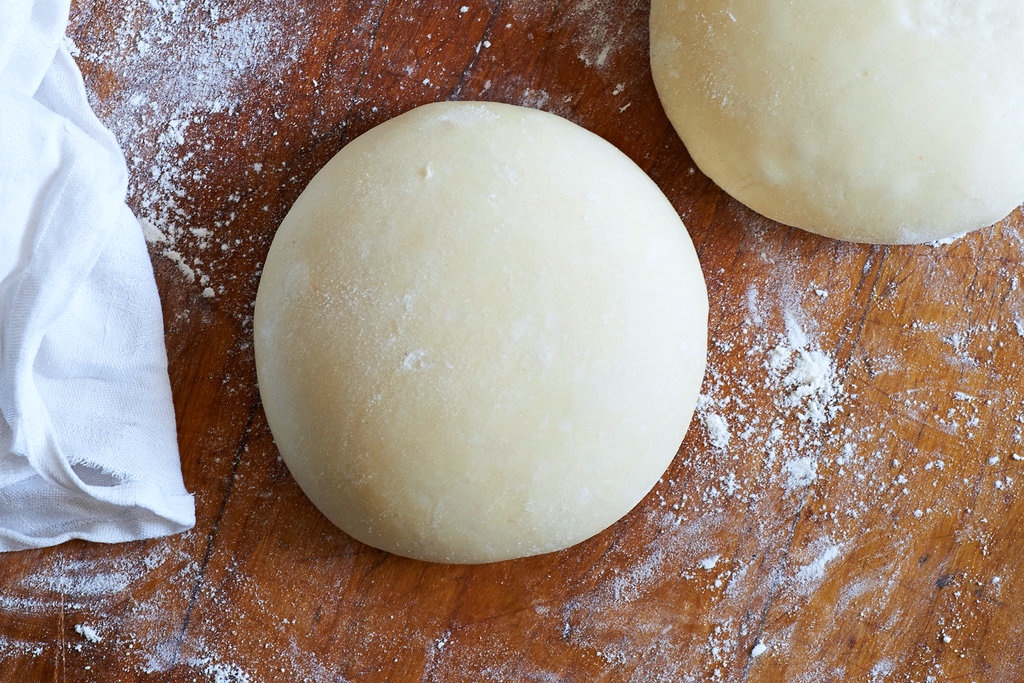
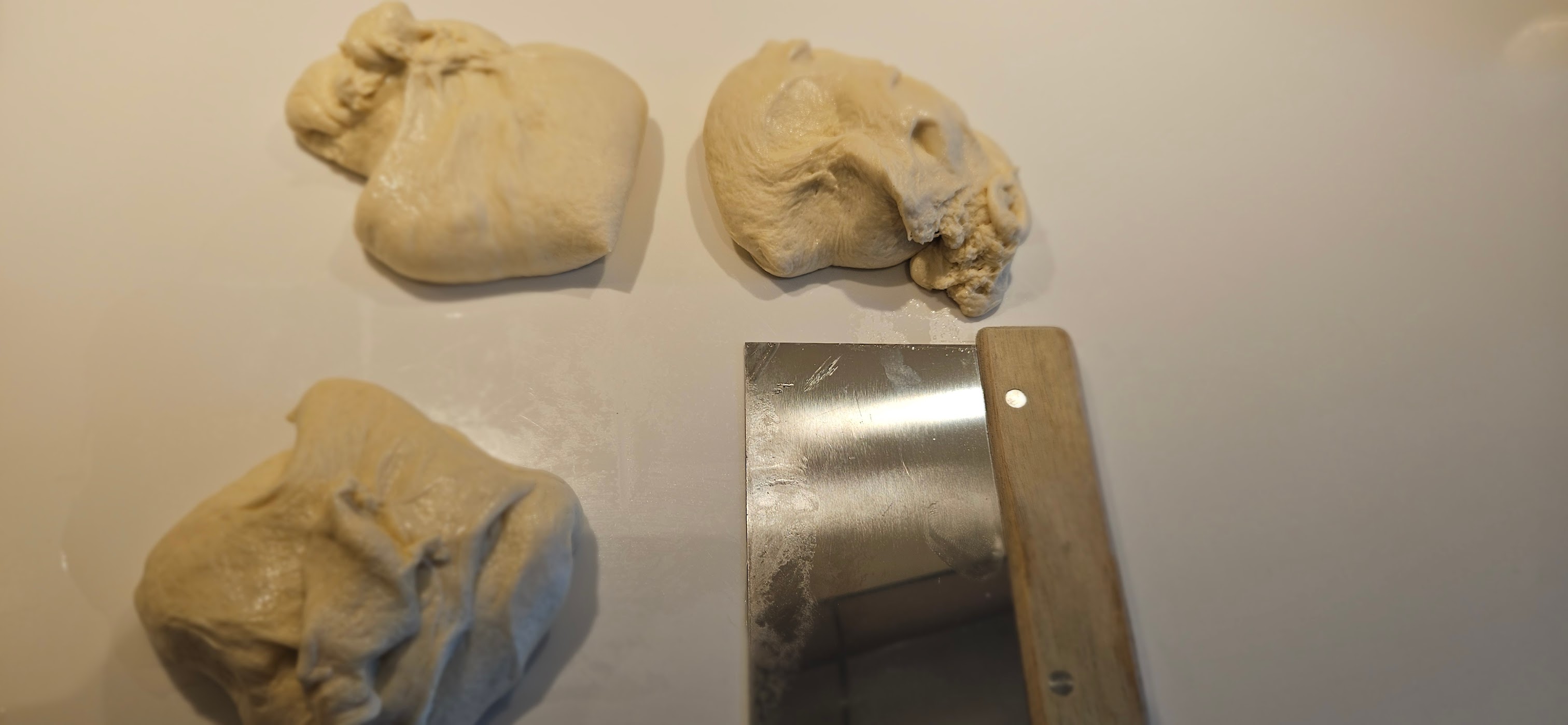
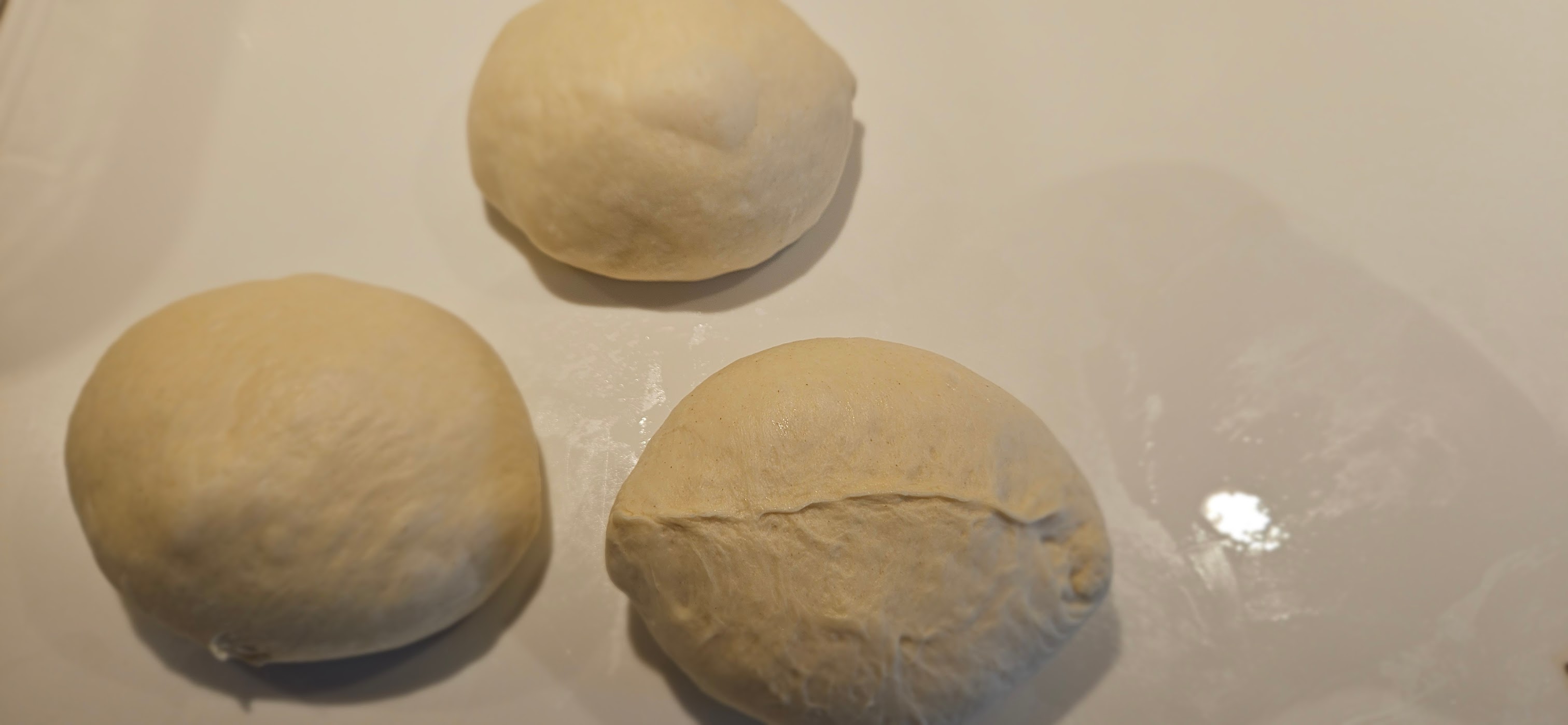
- Divide into portions (e.g., 240 g / 8.5 oz). Tighten into smooth balls and place in a lightly oiled container with a lid.
- Cold ferment in the fridge for 24–72 hours.
- Bring the dough balls out 1–2 hours before baking so they relax and stretch easily.
- Preheat your oven with a pizza stone/steel as hot as it goes for at least 45 minutes (250–300 °C / 480–570 °F if you have it).
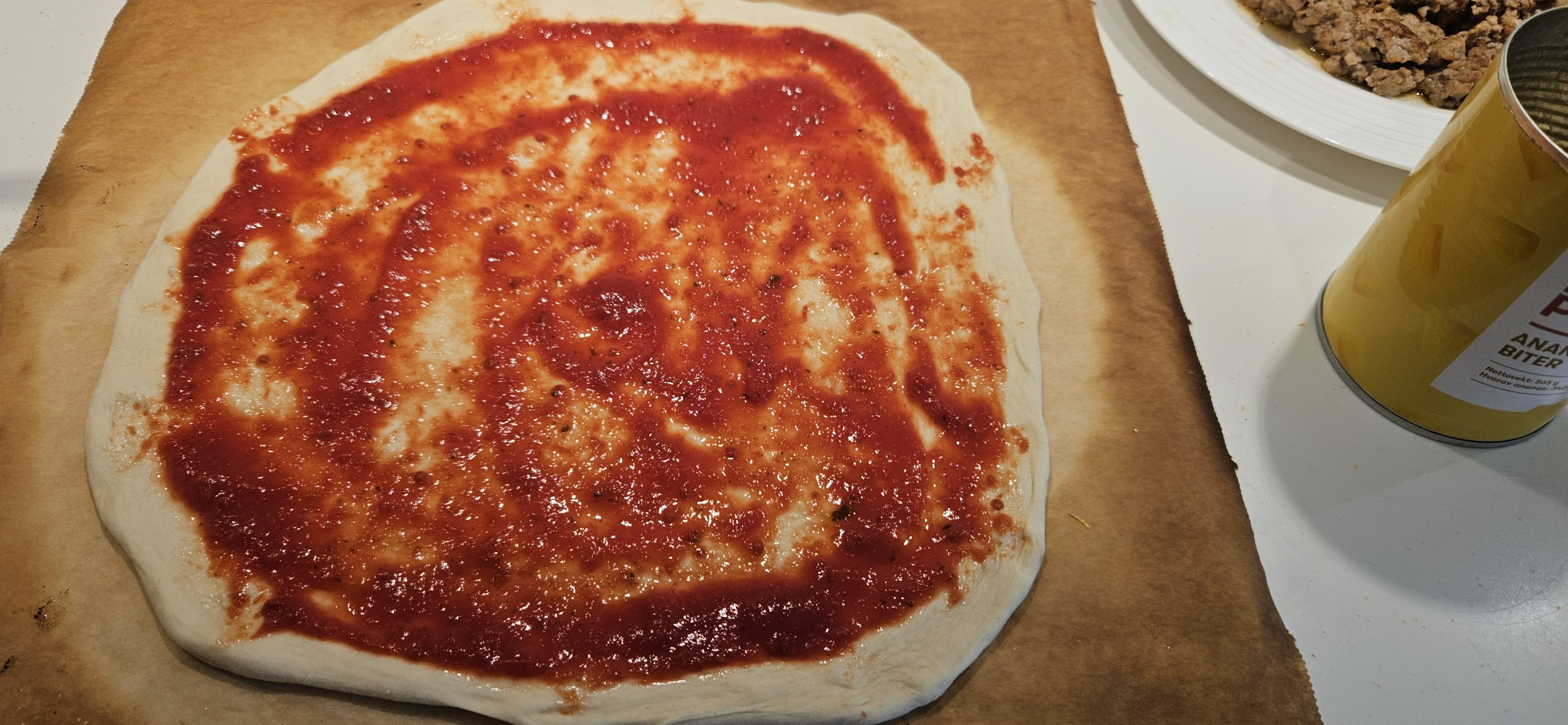
- Shape gently by hand. Keep air in the rim and skip the rolling pin.
- Bake until the bottom is crisp and the rim has clear “leopard spots,” usually 6–10 minutes depending on your oven.
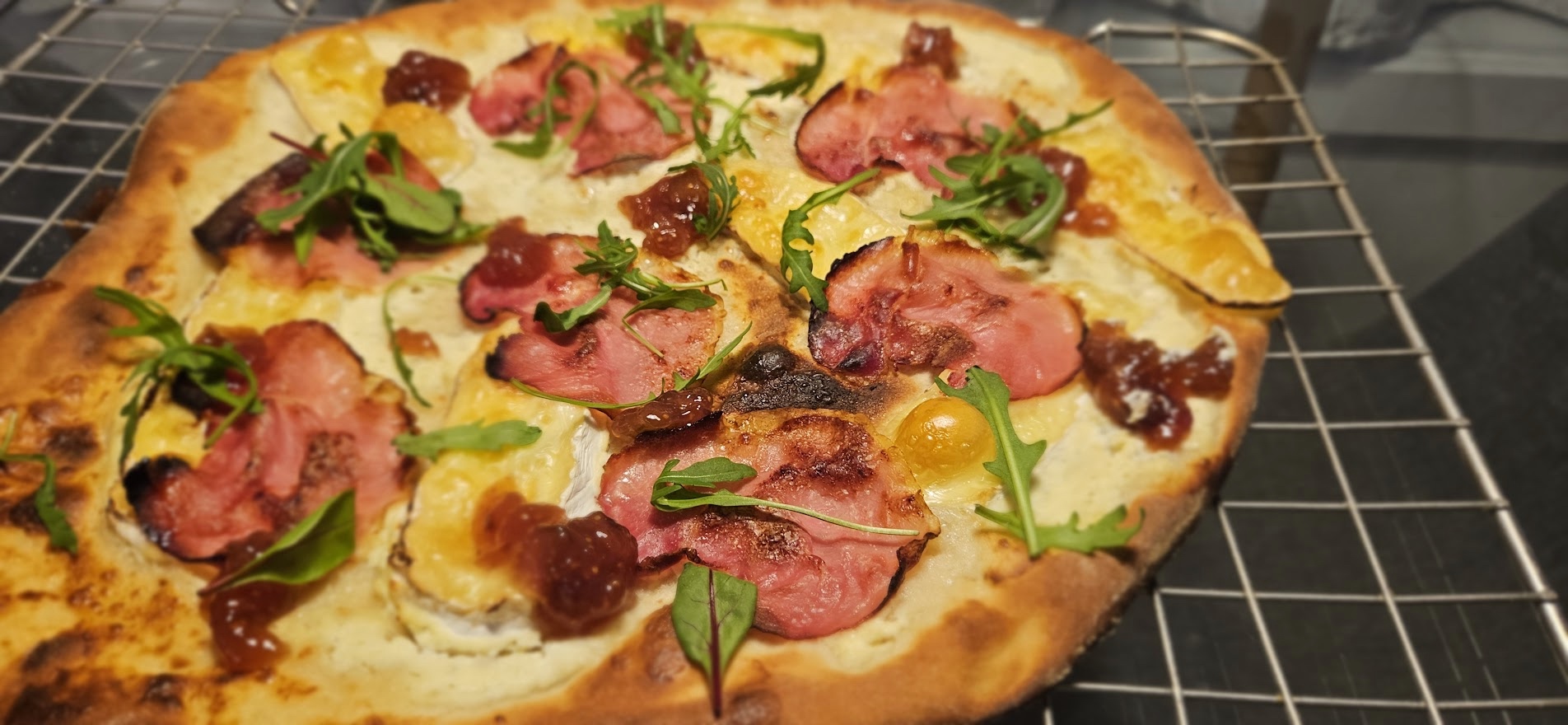
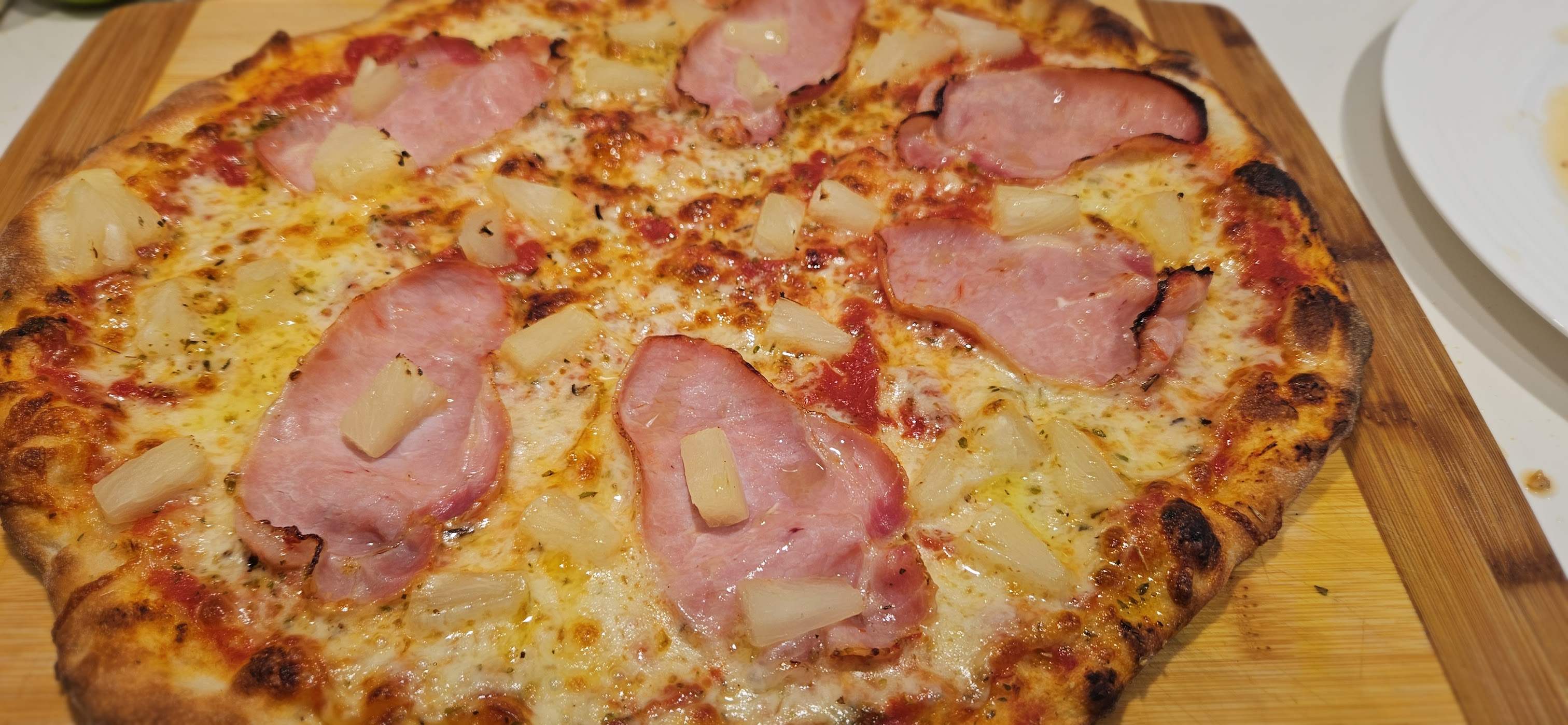
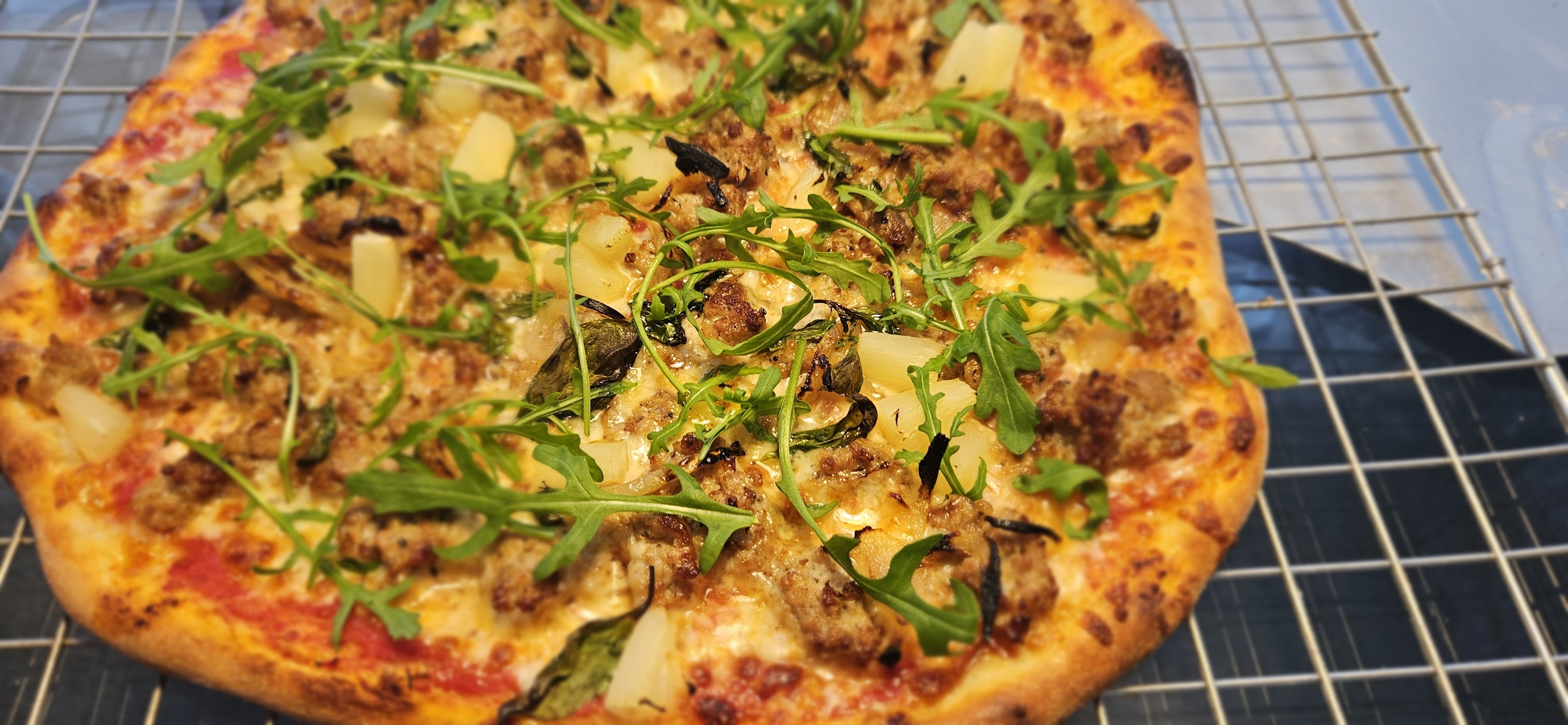
Pizza topping examples
Tips
- Same-day dough: increase yeast to 1% and let the dough rise 2–3 hours at room temperature before dividing and balling.
- Adjust hydration to match your flour and oven: 60% is easier to handle, 70% gives a lighter rim (but needs more technique).
- Build pizza like a proper meal: pick a protein first, then add a vegetable or two, and finish with something fresh after baking.