Introduction
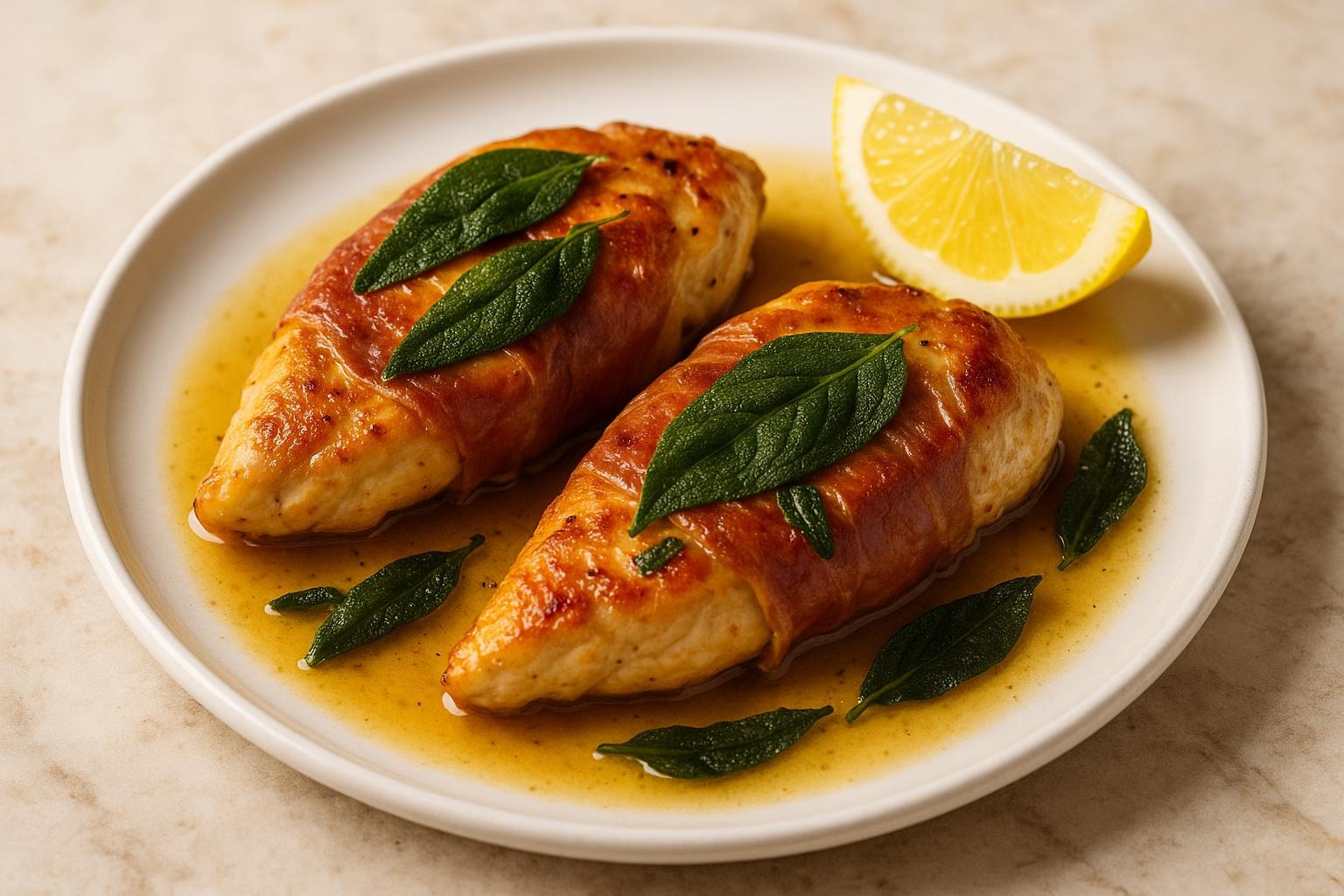
Saltimbocca means “jump in the mouth”, and it earns the name. Chicken breast is pounded thin, wrapped with prosciutto and sage, and pan-fried until the cured meat is crisp and the chicken stays juicy. The pan is deglazed with white wine and finished with cold butter into a glossy, silky sauce. Weeknight luxury in under half an hour.
Ingredients
Chicken
- 2 chicken breasts, approx. 200 g (7 oz) each
- 4 large fresh sage leaves (one per cutlet)
- 4 slices prosciutto di Parma
- 2 tbsp plain flour, for dredging
- 1 tbsp olive oil
- 10 g butter (2 tsp)
Pan sauce
- 150 ml dry white wine (⅔ cup)
- Juice of ½ lemon
- 30 g cold butter, cubed (2 tbsp)
- Salt and freshly ground black pepper
To serve
- 4–6 fresh sage leaves, fried in butter
- Lemon wedges
Method
-
Slice each chicken breast horizontally into two even fillets, or butterfly and split through. Place between plastic wrap and pound to approximately 1 cm (½ inch) thickness with a meat mallet. Season lightly with salt and pepper on both sides.
-
Lay one sage leaf on the top side of each fillet. Press a slice of prosciutto over it so it covers the entire surface and holds the sage in place. The prosciutto will adhere naturally.
-
Dip the underside of each fillet (not the prosciutto side) in flour and shake off the excess.
-
Heat the oil and 10 g (2 tsp) butter in a large frying pan over medium-high heat until the butter stops foaming. Place the fillets prosciutto-side down and cook for 2–3 minutes until the prosciutto is golden and crisp. Flip carefully and cook for 2 more minutes on the chicken side. The chicken is done when the internal temperature reaches 72 °C (162 °F). Transfer to a warm plate and tent loosely with foil.
-
Pour the white wine into the hot pan and scrape up all the fond with a spatula. Reduce over medium-high heat for 2–3 minutes until roughly half remains (from about 150 ml down to roughly 75 ml).
-
Stir in the lemon juice. Remove the pan from the heat and add the cold butter cubes one at a time, swirling the pan or whisking briskly. The sauce should become glossy and creamy, not broken. Season with salt and pepper.
-
Fry the extra sage leaves in a small knob of butter for 20–30 seconds until crisp; drain on kitchen paper.
-
Plate the fillets prosciutto-side up, spoon the sauce around and not over the fillets, so the prosciutto stays crisp, and top with the fried sage leaves and lemon wedges.
Serving note
Serve with risotto al bianco, soft polenta, or simply good crusty bread to mop up the sauce. For vegetables, steamed peas or haricots verts are a clean match.
Prosciutto can be swapped for any thin-sliced dry-cured ham. Thick slices will turn chewy, so buy it at the deli counter and ask for paper-thin. If fresh sage is unavailable, use half the quantity of dried sage, pressing it onto the chicken in step 1 rather than frying separately (dried sage burns easily in the hot pan).
This dish does not reheat well. The chicken dries out and the prosciutto loses its crisp. Eat it fresh off the pan.